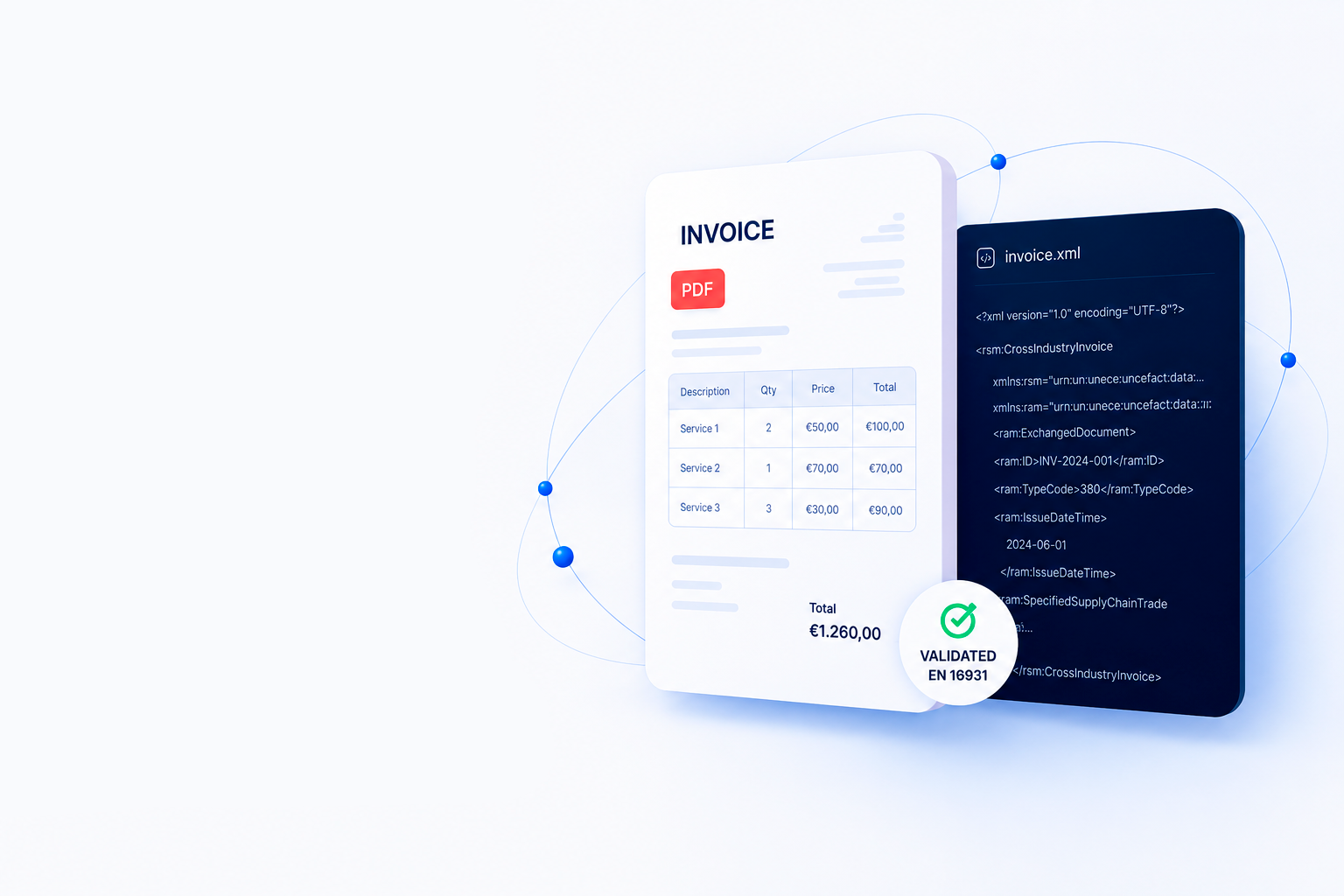
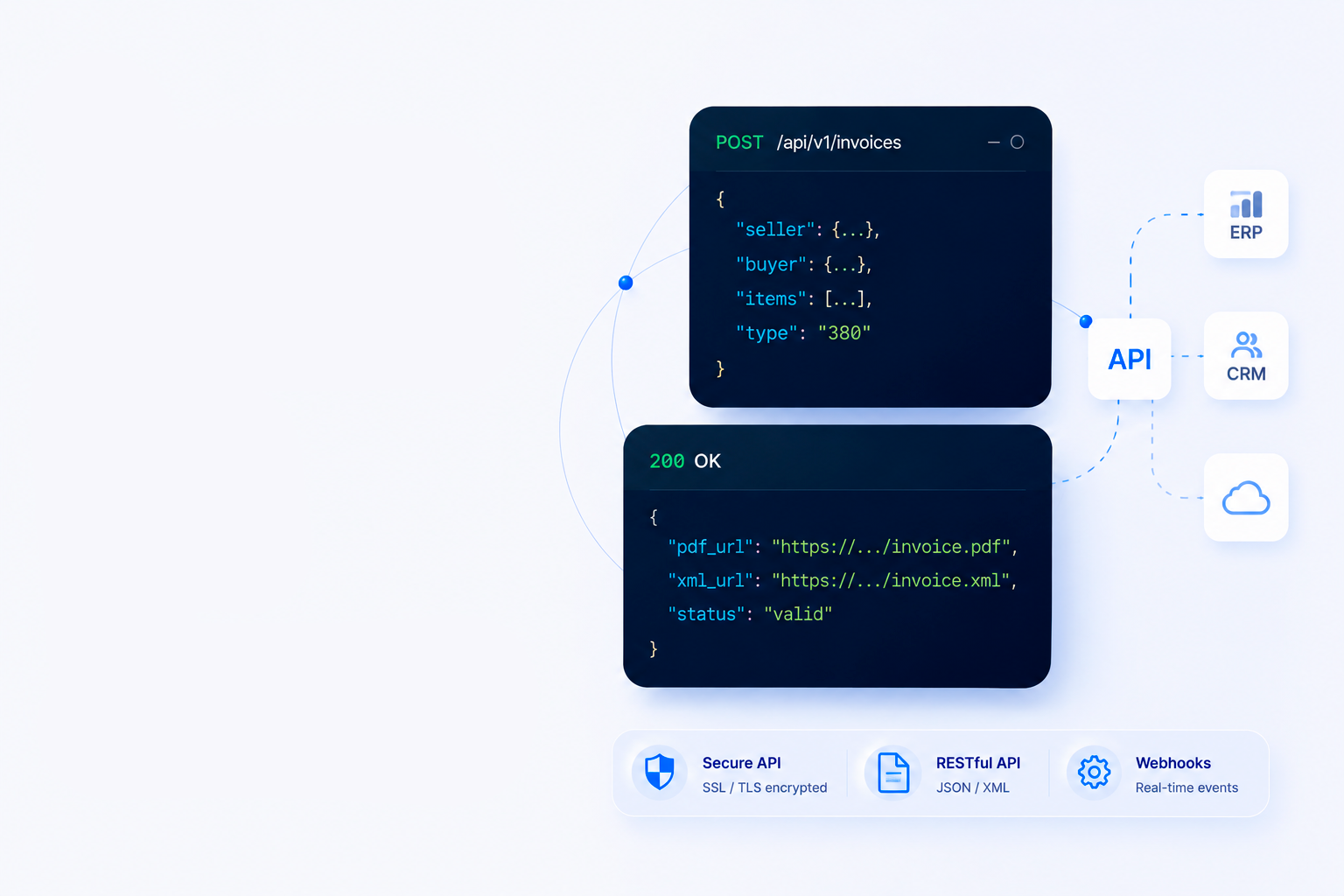
A ZUGFeRD invoice is an ordinary PDF with a structured XML file embedded inside it. The person who receives it opens a normal document; their accounting system reads the same figures straight from the XML, without anyone retyping them. What ZUGFeRD is and how the hybrid file is put together covers the format in detail, and the French twin format, Factur-X, shares the same schema and the same version numbers — an invoice produced as one will normally validate as the other.
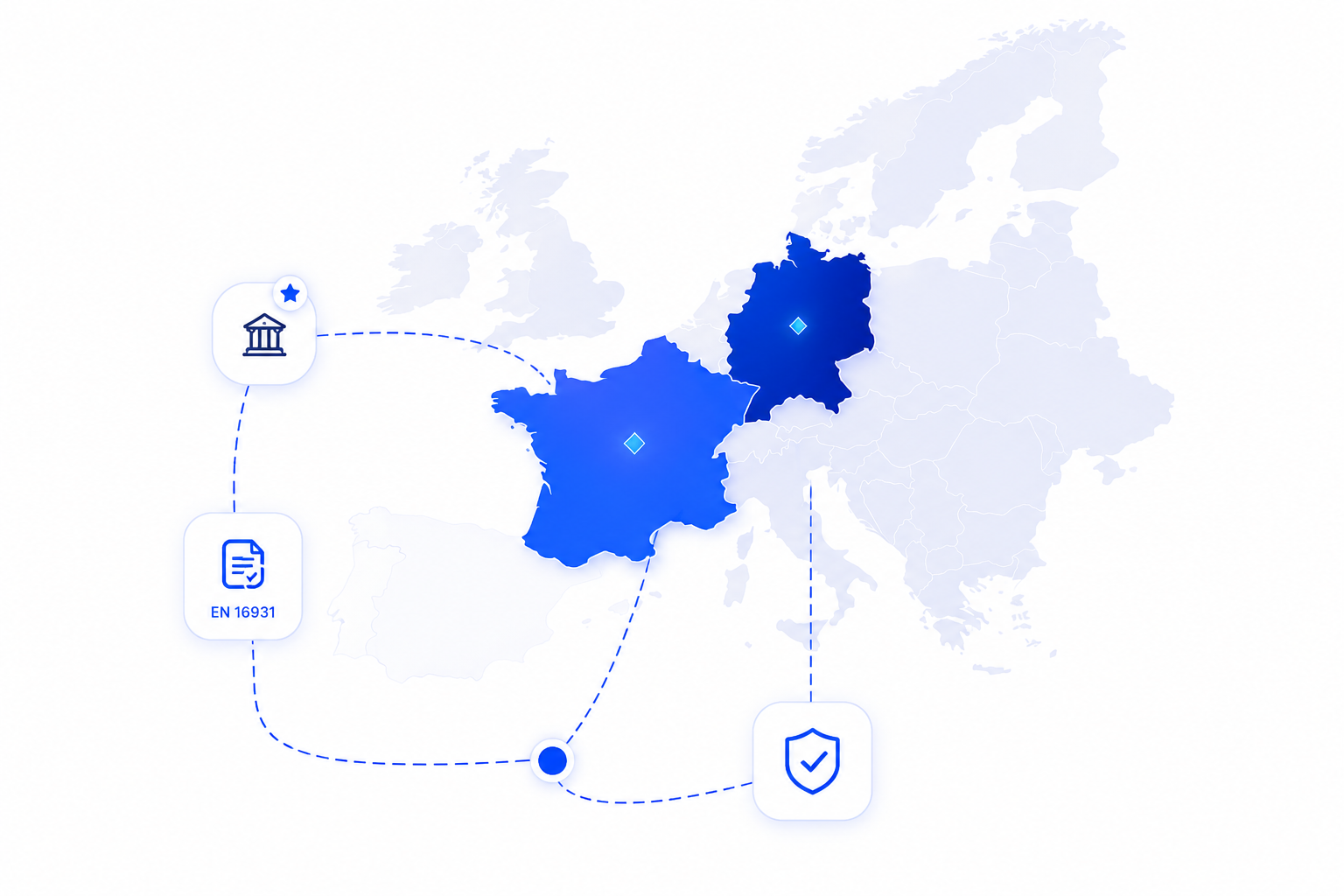
Both rest on the European standard EN 16931, which defines what an electronic invoice has to contain and which business rules it must satisfy. That shared foundation is why the German and French requirements converge rather than diverge: since January 2025 every business established in Germany must be able to receive such invoices, France follows from September 2026, and the obligation to issue them is phased in through 2027 and 2028.
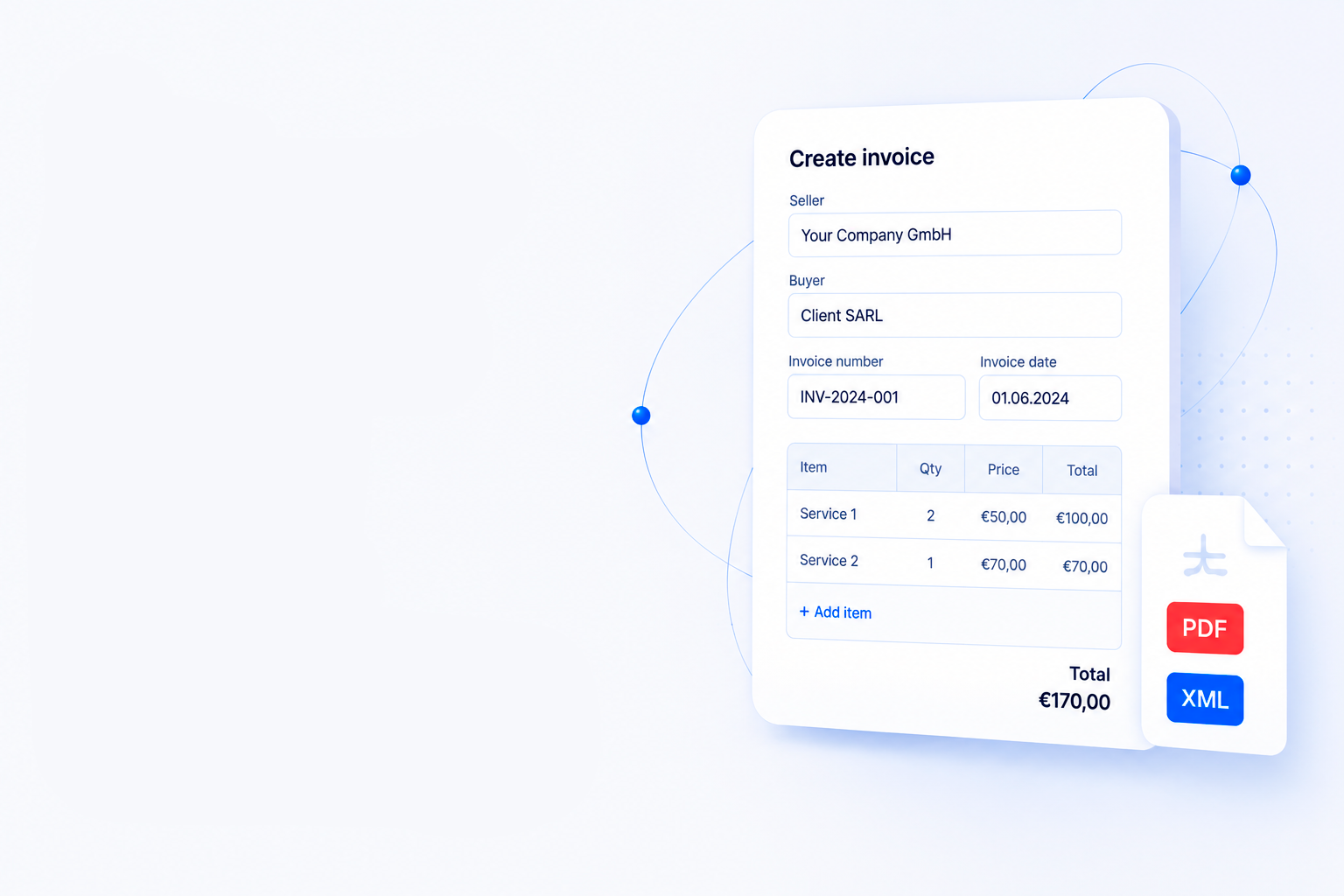
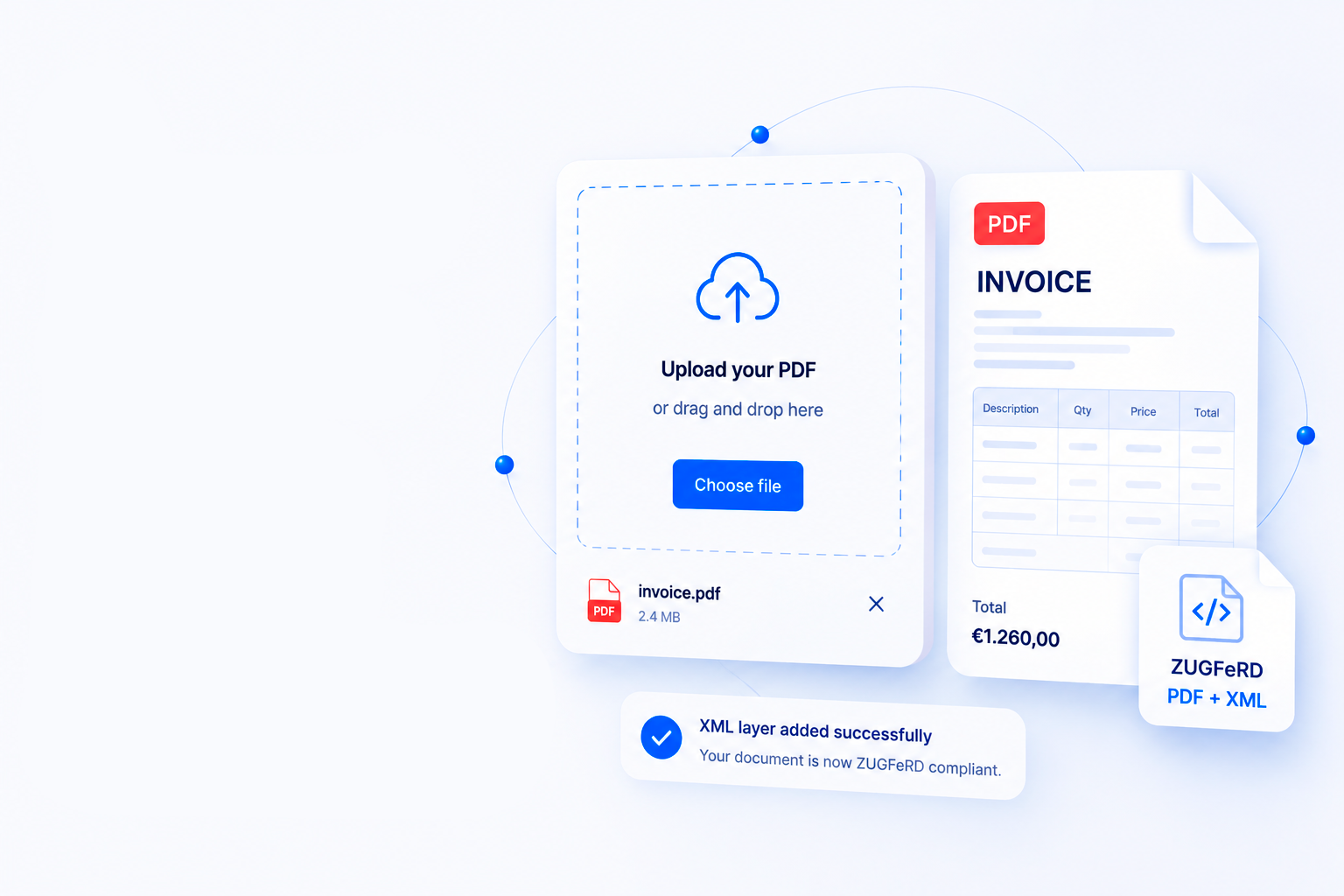
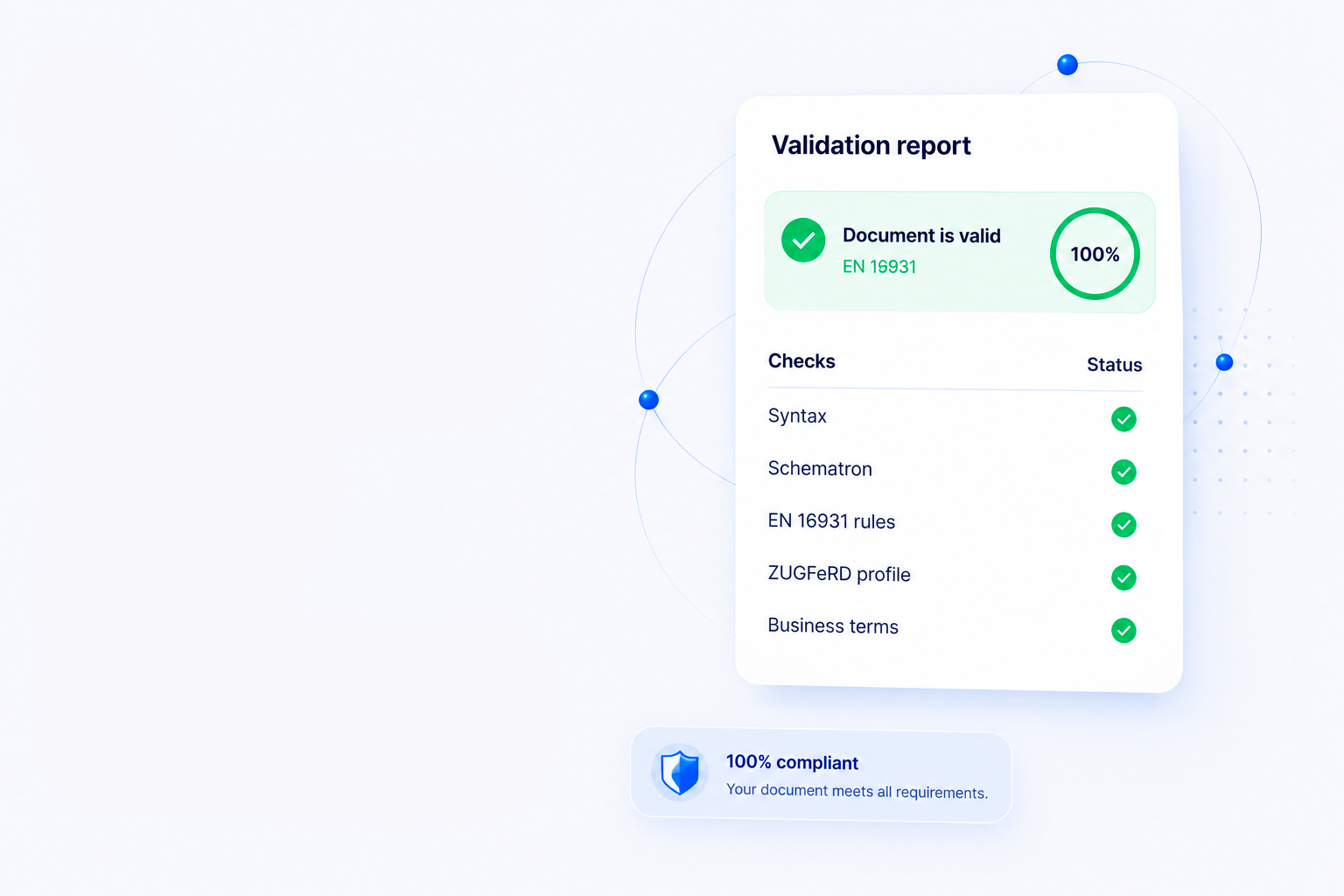
Where you start depends on what you have today. If your invoices already exist as ordinary PDFs, you can convert a PDF into ZUGFeRD and keep your existing layout. If you are starting from nothing, the online form will create your first e-invoice field by field. Either way it is worth running the result through validation before you send it: the check covers the PDF container, the embedded XML and the business rules that decide whether the recipient will accept the document at all.