
EN16931: The Backbone of European E-invoicing
Why EN16931 is so important and how it impacts your business.
Read articleEverything about ZUGFeRD, Factur-X and European e-invoicing in one place.
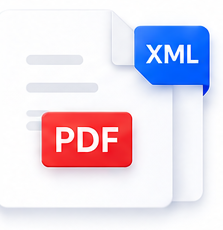
ZUGFeRD puts a machine-readable invoice inside an entirely ordinary PDF. What sits in the file, which version is current — and why two of the five profiles are not e-invoices at all.
Read more
Factur-X is ZUGFeRD under another name: an ordinary PDF that carries the structured invoice inside it. Here is what the French mandate requires, of whom, and from when.
Read moreNot competitors but two shells for the same data. The question is never which is better, but what the other side accepts.
Read more
One standard, many calendars. What applies in your country and from when, who is caught first — and which route is prescribed once it is.
Read moreThe standard does not fix a format; it fixes the meaning of every piece of information. What follows from that, why there are two syntaxes, and what the 2026 edition brings.
Read more
Without PDF/A-3 there would be no hybrid invoice. What the container does, what it demands — and the mistake that quietly destroys an otherwise valid file.
Read moreThree questions keep getting stirred into one: how long, what exactly, and in what form. The second is the one that trips people up.
Read moreA rate of 0% explains nothing in the XML. The standard wants category, rate and reason — three separate fields.
Read more
Peppol is not a format but a delivery network. Most misunderstandings start with both carrying the same name.
Read more
Not creating and not checking — the handover to the accountant is where hybrid invoices break.
Read more
Software reads no letterhead, only fields with fixed names in fixed places. Here they are — with the rule codes that object when one is missing.
Read more
The profile decides how much sits in the XML — and whether the file counts as an e-invoice at all. Two of the five do not, even though they pass every check.
Read more
A compliant e-invoice has to pass three separate checks, and failing any one of them makes the file invalid — even if it opens perfectly in a PDF reader.
Read more
Who says your invoice is valid, and against what did they measure it? This page answers both — including the limits a validator has.
Read moreSchema validation checks the shape of an invoice. Business rules check whether it makes sense — and that is where almost every rejection comes from.
Read moreBookkeeping, IT and tax law use the same words for different things. Here is what each of them means.
Read more
Why EN16931 is so important and how it impacts your business.
Read article
A detailed comparison between the two e-invoicing standards.
Read article
A complete guide to using the Mustang validator step by step.
Read article